The Conference affirmed the Canadian position that dominions had the right to pursue their own foreign policy autonomously from Britain and the Empire and could negotiate and sign treaties on their own behalf.
What happened at the Imperial Conference?
The conference was notable for producing the Balfour Declaration, which established the principle that the dominions are all equal in status, and “autonomous communities within the British Empire” not subordinate to the United Kingdom. The term “Commonwealth” was officially adopted to describe the community.
What was agreed at the Imperial Conference 1911?
The conference came to an agreement on the negotiation of treaties that affect various dominions and that the British government would consult the dominions when preparing its proposals for proposed international Peace Conferences and that future international peace treaties and some international agreements would be …
What did the Statute of Westminster do?
Statute of Westminster gives legal status to the independence of Australia, Canada, Irish Free State, Newfoundland, New Zealand and South Africa. The Statute of Westminster, passed by the UK parliament in 1931, gave legal recognition to the de facto independence of the dominions.
What happened in the halibut treaty?
The treaty proposed a season closed to commercial fishing from 16 November to 15 February. Those that were caught during this period faced penalties up to and including seizure. By the 1920s, halibut stocks were noticeably lower to all parties and in 1923, the treaty was ratified by the United States Congress in 1923.
What restrictions to Canadian autonomy remained after the Statute of Westminster was passed?
They now had full legal freedom except in areas of their choosing. The Statute also clarified the powers of Canada’s Parliament and those of the other Dominions. (See also Editorial: The Statute of Westminster, Canada’s Declaration of Independence.)
In which year Imperial was Cabinet conference started from?
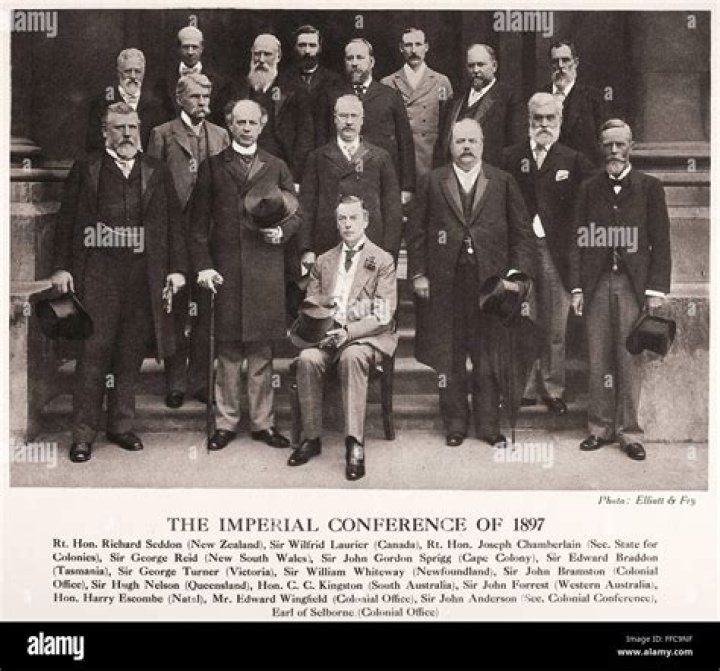
Imperial Conferences (Colonial Conferences before 1907) were periodic gatherings of government leaders from the self-governing colonies and dominions of the British Empire between 1887 and 1937, before the establishment of regular Meetings of Commonwealth Prime Ministers in 1944.
When was the last imperial conference?
The 1937 Imperial Conference was held in London from 14 May to 24 June 1937, following the coronation of King George VI on 12 May. It was the eighth and final Imperial Conference and the last meeting of British and dominion prime ministers held until World War II.
Who did the Balfour Declaration upset?
What impact did it have on Palestinians? The Balfour Declaration is widely seen as the precursor to the 1948 Palestinian Nakba when Zionist armed groups, who were trained by the British, forcibly expelled more than 750,000 Palestinians from their homeland.
Who signed the Balfour report?
| Balfour Declaration | |
|---|---|
| Location | British Library |
| Author(s) | Walter Rothschild, Arthur Balfour, Leo Amery, Lord Milner |
| Signatories | Arthur James Balfour |
| Purpose | Confirming support from the British government for the establishment in Palestine of a “national home” for the Jewish people, with two conditions |
When did Canada stop being the Dominion of Canada?
Government institutions in Canada effectively stopped using the word Dominion by the early 1960s. The last hold-over was the term Dominion Day, which was officially changed to Canada Day in 1982….Dominion of Canada.
| Published Online | February 7, 2006 |
|---|---|
| Last Edited | November 7, 2019 |
Where did the Imperial Conference of 1921 meet?
The Imperial Conference of 1921 met in London from 20 June to 5 August 1921. It was chaired by British prime minister David Lloyd George. The Prime Ministers of the United Kingdom and the Dominions met at the 1921 Imperial Conference to determine a unified international policy, particularly the relationship with the United States and Japan.
Who were the leaders of the Imperial Conference of 1926?
Imperial Conference. King George V (front, centre) with his prime ministers in 1926. Standing (left to right): Walter Stanley Monroe (Newfoundland), Gordon Coates (New Zealand), Stanley Bruce (Australia), J. B. M. Hertzog (Union of South Africa), W. T. Cosgrave (Irish Free State).
What was the purpose of the Imperial Conference?
Imperial Conferences (Colonial Conferences before 1907) were periodic gatherings of government leaders from the self-governing colonies and dominions of the British Empire between 1887 and 1937, before the establishment of regular Meetings of Commonwealth Prime Ministers in 1944.
When was the last Imperial Conference held in London?
As World War II drew to a close, Imperial Conferences were replaced by Commonwealth Prime Ministers’ Conferences, with 17 such meetings occurring from 1944 until 1969, all but one of the meetings occurred in London.