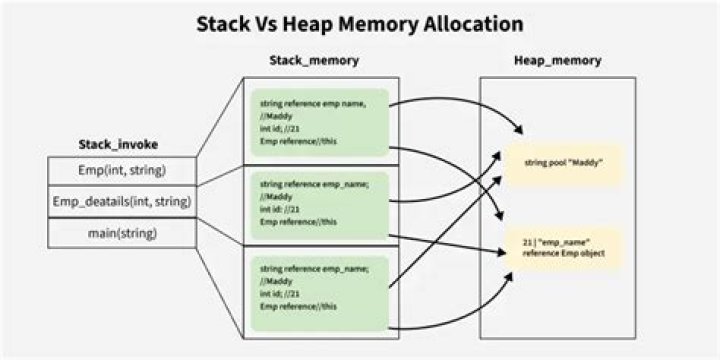
Stack is used for static memory allocation and Heap for dynamic memory allocation, both stored in the computer’s RAM . Variables allocated on the heap have their memory allocated at run time and accessing this memory is a bit slower, but the heap size is only limited by the size of virtual memory .
What is the difference between PermGen and heap?
PermGen is an abbreviation for Permanent Generation and it’s a special heap space which is separate from the main Java heap where JVM keeps track of metadata of the classes which have been loaded. Whenever there is a need to resize PermGen/Metaspace, JVM will do it as it does with the standard heap.
What is PermGen space in heap?
PermGen (Permanent Generation) is a special heap space separated from the main memory heap. Additionally, the JVM stores all the static content in this memory section. This includes all the static methods, primitive variables, and references to the static objects.
What is PermGen size?
The default size of PermGen memory is 64 MB on 32-bit JVM and 82 MB on the 64-bit version.
Which is faster stack or heap?
Because the data is added and removed in a last-in-first-out manner, stack-based memory allocation is very simple and typically much faster than heap-based memory allocation (also known as dynamic memory allocation) typically allocated via malloc .
What is the size of heap?
The value of the JVM heap size is directly related to the amount of physical memory in the system. Set the initial and maximum heap sizes to 4096 to start tuning, because 64-bit operating systems have an address space limit of 4 GB, regardless of the amount of physical memory in the system.
Why is Python not memory efficient?
Due to its simplicity, however, Python does not provide you much freedom in managing memory usage, unlike in languages like C++ where you can manually allocate and free memory.
What is the difference between a stack and a heap?
A stack is not flexible, the memory size allotted cannot be changed whereas a heap is flexible, and the allotted memory can be altered. Accessing time of heap takes is more than a stack. Memory is allocated in a contiguous block. Memory is allocated in any random order.
What are the pros and cons of using heap memory in Java?
Pros/benefit of using heap memory are: Garbage collection runs on the heap memory to free the memory used by the object. Heap method also used in the Priority Queue. It allows you to access variables globally. Heap doesn’t have any limit on memory size. Cons/Drawbacks of using Stack memory are: Stack memory is very limited.
What is the use of PermGen in Java?
PermGen contains meta-data of the classes and the objects i.e. pointers into the rest of the heap where the objects are allocated. The PermGen also contains Class-loaders which have to be manually destroyed at the end of their use else they stay in memory and also keep holding references to their objects on the heap.
Why is permgen so hard to tune?
The PermGen also contains Class-loaders which have to be manually destroyed at the end of their use else they stay in memory and also keep holding references to their objects on the heap. PermGen always has a fixed maximum size.PerGen space cannot be made to auto increase so it is difficult to tune it.