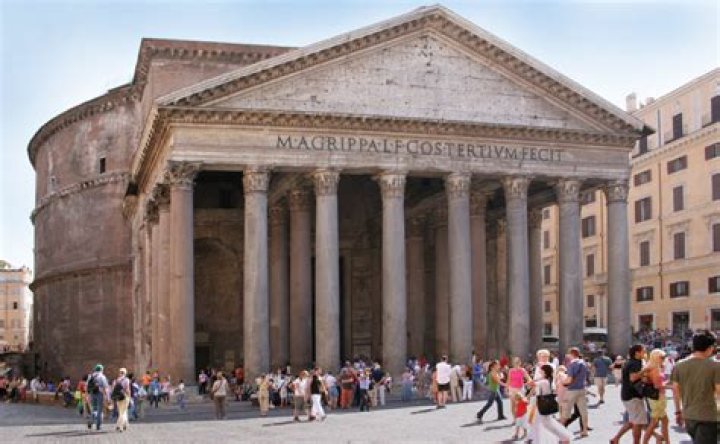
Greco- Roman architecture is defined and known all over the world for its sheer magnificence, huge columns, defined structures, and iconic beauty. That era’s most representative buildings were the temples with the use of three primary styles of column design in classical Greece – Doric, Ionic, and Corinthian.
Where did the Greco-Roman ideas come from?
History and development: Greco-Roman religion. The origins of ancient Greek religion go back thousands of years. The Greeks took some of their ideas from the ancient Minoan civilization (c. 3000–c.
What architectural achievements did the Greco-Roman culture introduce?
The Romans were also innovators and they combined new construction techniques and materials with creative design to produce a whole range of brand new architectural structures. Typical innovative Roman buildings included the basilica, triumphal arch, monumental aqueduct, amphitheatre, and residential housing block.
When was the Greco-Roman era?
Classical antiquity (also the classical era, classical period or classical age) is the period of cultural history between the 8th century BC and the 6th century AD centred on the Mediterranean Sea, comprising the interlocking civilizations of ancient Greece and ancient Rome known as the Greco-Roman world.
Why is Greco-Roman culture important?
The Greco-Roman civilization provided a large amount of classical influence on the new culture. Large portions of the population in Europe were not Roman, but they were influenced by the Romans. This new culture perpetuated many classical practices that were popular in the Greco-Roman civilization.
What type of building is a Stoa?
stoa, plural Stoae, in Greek architecture, a freestanding colonnade or covered walkway; also, a long open building, its roof supported by one or more rows of columns parallel to the rear wall. The Stoa of Attalus at Athens is a prime example.
What is the most famous Roman architecture?
The Colosseum
The Colosseum is the most prominent example of ancient Roman architecture, but also the Roman Forum, the Domus Aurea, the Pantheon, Trajan’s Column, Trajan’s Market, the Catacombs, the Circus Maximus, the Baths of Caracalla, Castel Sant’Angelo, the Mausoleum of Augustus, the Ara Pacis, the Arch of Constantine, the …
What are the main features of Roman architecture?
What are the main features of Roman architecture? Romans aspired to create conservative buildings. Arches were used to create taller and wider structures. Many Roman buildings were made with marble or limestone. They mastered a number of important architectural techniques, including the arch, the dome and the vault, as well as the use of concrete.
Certainly, the most famous Roman architect is Vitruvius, principally because his On Architecture, a 10-volume study of architecture, has survived intact. We do not actually know much about his own work – only a basilica he constructed in Fano and that he did work for Julius Caesar and Augustus.
What are the similarities between Greek and Roman architecture?
The most obvious similarity between Greek and Roman architecture is the use of the Doric, Ionic and Corinthian orders. Though the Greeks developed the Corinthian order, the Romans seemed to have favored it more and constructed more buildings using that order than the Greeks did.
What is the history of Roman architecture?
The Architectural Orders. Roman architects continued to follow the guidelines established by the classical orders the Greeks had first shaped: Doric,Ionic,and Corinthian.